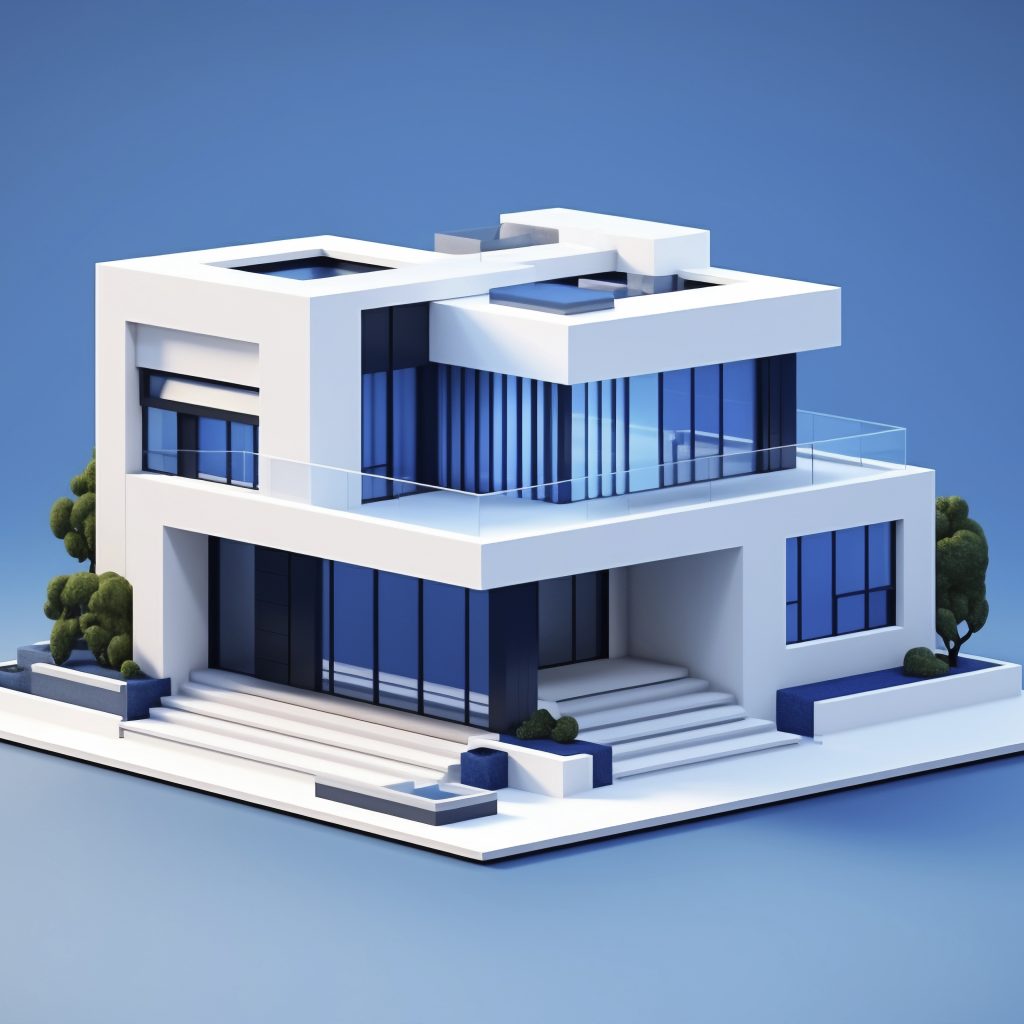
3D elevation plays a crucial role in visualizing the exterior identity of a building before construction begins. At Anshul Sharma & Architects, our 3D elevation services focus on creating realistic, proportionate, and context-responsive building visuals that reflect the architectural intent accurately.
This project showcases our approach to 3D elevation design for residential and commercial buildings, helping clients clearly understand form, materials, scale, and overall aesthetics before execution.
Objectives
The primary objectives of our 3D elevation process include:
Visualizing the final exterior outcome:
To provide a realistic representation of the building’s façade, massing, and proportions.
2. Enhancing architectural aesthetics:
To design elevations that balance style, symmetry, and contextual relevance.
3. Material and finish clarity:
To help clients visualize textures, colors, and material combinations accurately.
4. Supporting design decision-making:
To reduce confusion and design changes during execution through clear visualization.
5. Aligning elevation with budget and feasibility:
To ensure the proposed elevation design is practical, buildable, and cost-efficient.
Our 3D Elevation Approach
We follow a systematic and detail-driven process to deliver accurate and impactful 3D elevation designs.
Design Brief & Concept Understanding
Understanding architectural style preferences, functional requirements, and site context.
2. Massing & Proportion Development
Defining building volumes, heights, setbacks, and façade composition.
3. Material & Texture Selection
Applying realistic materials, finishes, and color palettes aligned with design intent.
4. Lighting & Shadow Study
Enhancing depth, form, and realism through natural and artificial lighting simulation.
5. Design Refinement
Incorporating client feedback to finalize aesthetics and proportions.
6. Final 3D Output
Delivering high-quality 3D elevation views ready for presentations and execution reference.
Results & Outcomes
Our 3D elevation-driven approach delivers tangible benefits:
Clear Design Visualization – Clients understand the final exterior appearance before construction
2. Reduced Design Revisions – Fewer changes during execution
4. Execution Accuracy – Elevation acts as a visual reference on-site
5. Enhanced Project Presentation – Ideal for approvals and stakeholder discussions
Why 3D Elevation Matters
3D elevation bridges the gap between drawings and reality. It helps identify design issues early, visualize proportions accurately, and align expectations between architects, clients, and contractors.
A well-developed elevation reduces miscommunication and ensures the built structure matches the design intent.
Conclusion
3D elevation is not just about visual appeal—it is about design clarity, execution confidence, and architectural accuracy. This project demonstrates how detailed 3D elevation design enhances understanding, minimizes errors, and supports smooth construction.
At Anshul Sharma & Architects, we use 3D elevation as a powerful tool to transform concepts into build-ready realities.